
STI Knowledge
STI Testing
Learn why, when, and how to test for STIs — sample types, common panels, window periods, privacy, reading results, retesting, and links to treatment.
Introduction
STI testing is essential sexual health care — not only when symptoms appear. Many STIs like chlamydia, gonorrhea, and HPV are asymptomatic but still spread and cause complications. Testing reveals status, enables early treatment, supports prevention planning, and helps honest partner communication.
Each STI has different tests and window periods. Some use urine or swabs; others need blood. Sexual health clinics design panels based on your behavior and symptoms. You may not need every test every time, but coverage should match real risk.
This page covers why and when to test, sample types, common panels, window periods, privacy, reading results, retesting, and treatment links. New to STIs? Start with What are STIs?. For each condition, see common STIs.
STI services are confidential — do not delay from fear or shame. Good clinics offer neutral information. Questions? See FAQ, articles, or contact us.
Regular testing is prevention too — not just "finding disease." Pair this page with STI prevention. If positive, see STI treatment.
Why test for STIs
STI testing finds asymptomatic infections — very common, especially chlamydia and gonorrhea. Early detection enables timely treatment, reduces transmission, and lowers complication risk such as pelvic inflammatory disease, fertility problems, or long-term syphilis damage. Testing supports targeted prevention instead of guessing your status.
Regular testing is responsible partner care. With multiple or new partners, knowing your status reduces unintentional transmission. People on PrEP often follow STI screening schedules because PrEP does not cover other STIs. Testing is core sexual health, not secondary.
- Find asymptomatic infections and treat early
- Reduce transmission to partners
- Prevent long-term complications
- Plan prevention and sex with informed choices
- Link to treatment when needed
When to test
Test promptly for suspected symptoms — sores, discharge, burning urine, rash, pelvic pain, swollen glands. Without symptoms, test with new partners, condomless sex, partner notification, condom failure, or on your screening schedule. General guidance: at least 1–2 times yearly with new or multiple partners; every 3–6 months if higher risk.
| Situation | Recommendation | Notes |
|---|---|---|
| Suspected STI symptoms | Test immediately | Do not wait to self-resolve |
| Partner notification | Test even without symptoms | May need partner treatment |
| New/multiple partners | Test before/after new relationships | Use condoms while awaiting results |
| Condomless sex | Test per risk level | More frequent if ongoing |
| Routine screening due | Test on schedule | 1–2 times yearly as baseline |
| After STI treatment | Follow-up per clinician | Confirm cure |
If unsure when to test, ask a sexual health clinician. Calendar reminders twice yearly help many people. Pregnant people should follow prenatal screening, often including syphilis, hepatitis B, and other STIs as indicated.
Sample types and collection
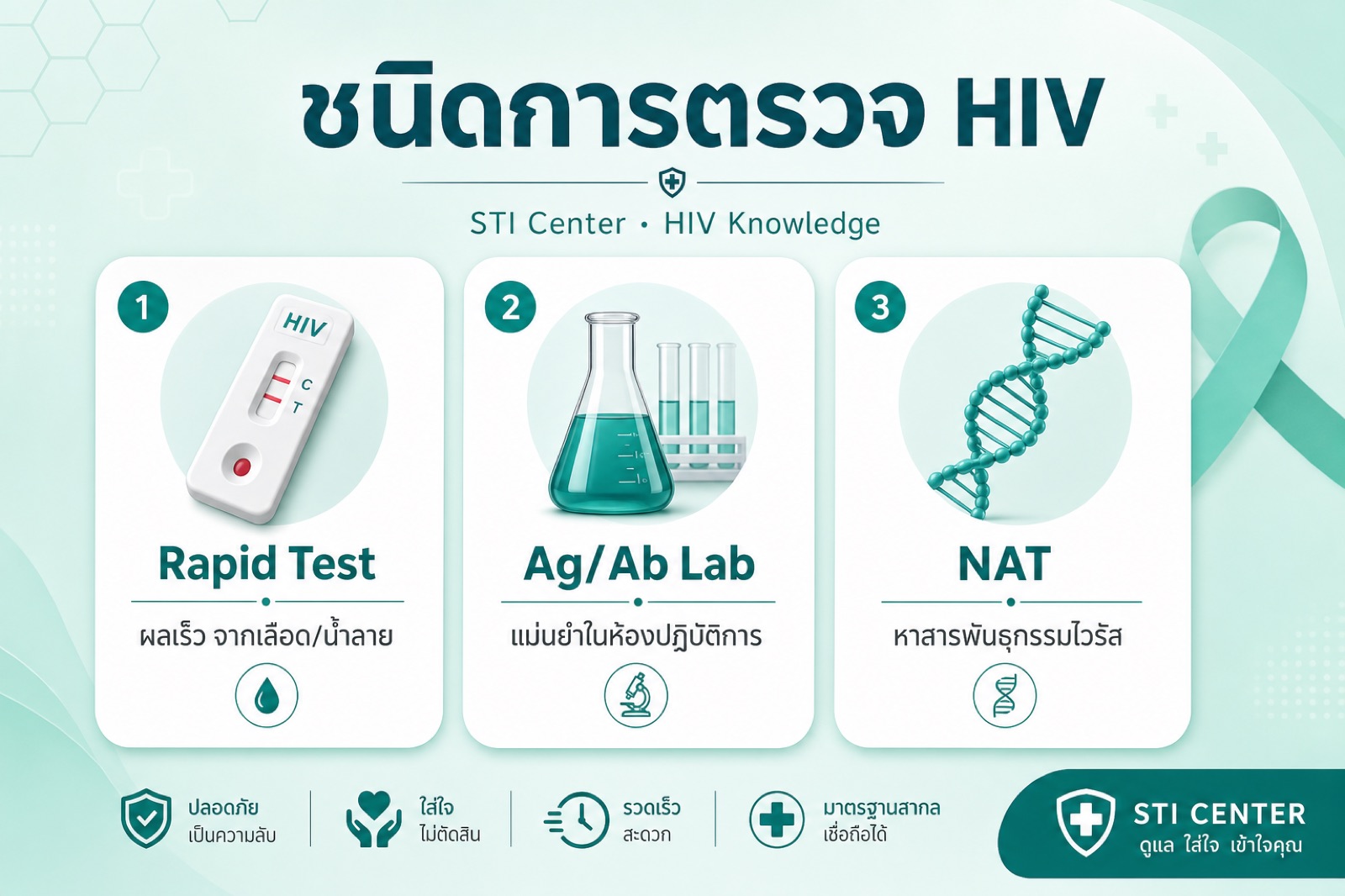
STI tests use several sample types depending on the infection and body site. Urine tests detect genital chlamydia and gonorrhea — often first-catch urine, sometimes after 1–2 hours without urinating per clinic protocol for adequate concentration.
Swabs from throat, rectum, vagina, or sores detect chlamydia, gonorrhea, herpes, or syphilis. Rectal and throat swabs matter for anal or oral sex even without genital symptoms. Blood tests cover syphilis, hepatitis B, and HIV if included in the panel.
| Sample | Common targets | Notes |
|---|---|---|
| Urine | Chlamydia, gonorrhea | Follow clinic collection instructions |
| Throat swab | Chlamydia, gonorrhea | For oral sex exposure |
| Rectal swab | Chlamydia, gonorrhea | For anal sex exposure |
| Sore swab | Herpes, syphilis | When lesions present |
| Blood | Syphilis, hepatitis B, HIV | May need repeat per window period |
Common STI panels
Sexual health clinics often offer panels combining multiple tests. Basic panels may include chlamydia, gonorrhea, and syphilis. Expanded panels may add hepatitis B, herpes (with lesions), HPV (often via Pap/HPV testing), and HIV if at risk. Clinicians tailor panels to behavior, symptoms, and history.
Example panels by risk
- Basic: chlamydia + gonorrhea (urine/swab) + syphilis (blood)
- Add throat/rectal swabs: for oral or anal sex
- Add hepatitis B: if immune status unknown or at risk
- Add HIV: if HIV risk exists (PrEP does not replace STI screening)
- Herpes: when sores present — swab from lesion
For each condition, symptoms, and treatment, see common STIs. If unsure which panel fits, ask before testing — risk-matched screening is more useful.
Window periods — overview
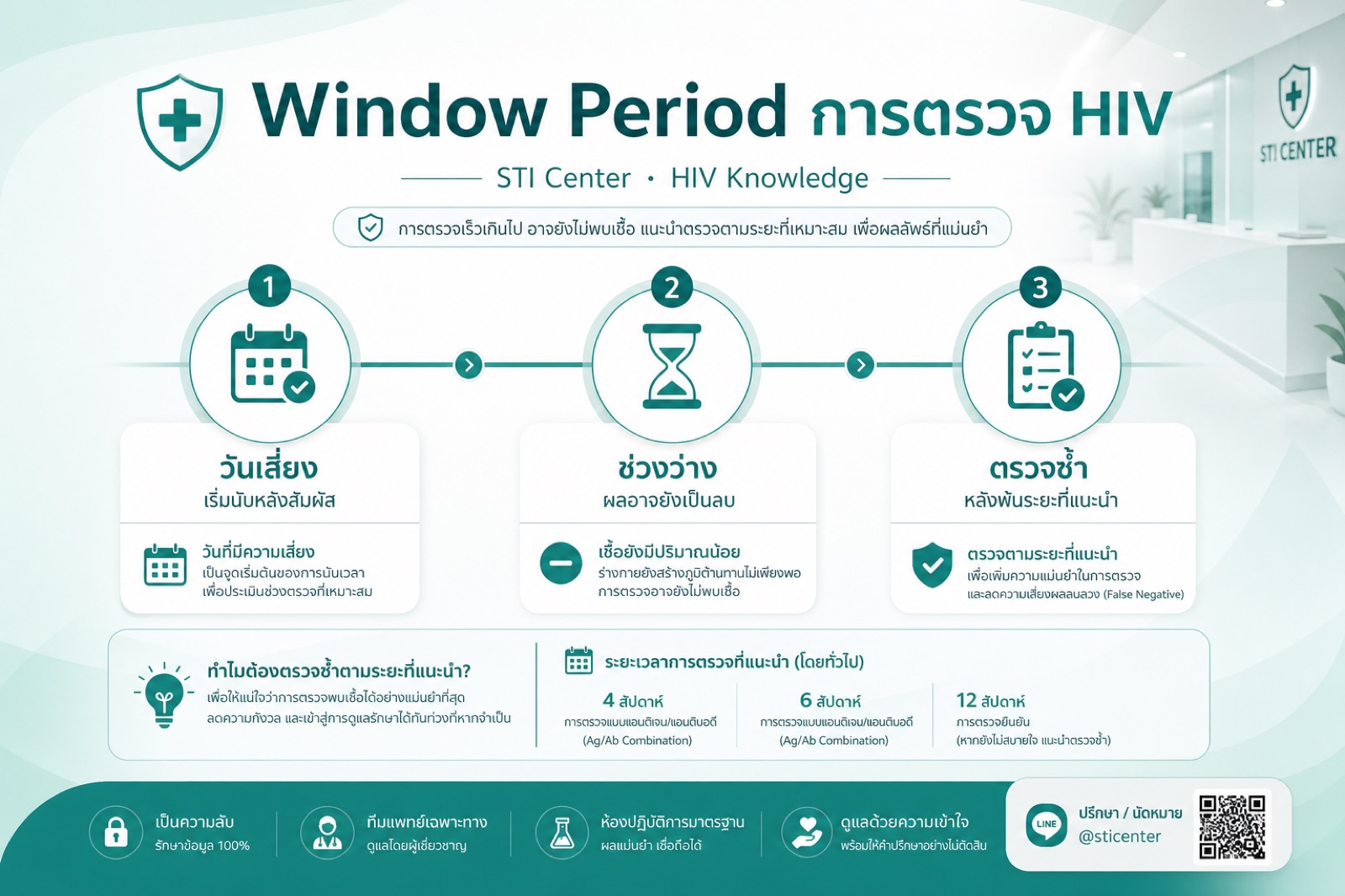
The window period is the time after exposure until a test reliably detects infection. Testing too early may yield false negatives. Chlamydia and gonorrhea often detect within 1–2 weeks; syphilis and HIV may need longer. Clinicians advise first and repeat test timing.
| Condition | Approximate window | Notes |
|---|---|---|
| Chlamydia | 1–2 weeks | NAAT sensitive |
| Gonorrhea | 1–2 weeks | NAAT sensitive |
| Syphilis | 2–6 weeks | May need repeat |
| Herpes | When sore present | Lesion swab |
| Hepatitis B | 4–12 weeks | Antigen/antibody tests |
| HIV | 2–12 weeks | Depends on test type |
After recent exposure, clinicians may test immediately (for prior infection) and schedule repeat testing after the window period. Do not assume safety from one early negative. Use condoms and avoid unnecessary exposure until repeat testing as advised.
Privacy and access
STI testing at appropriate sexual health clinics is confidential. Your information should be protected under medical ethics and law. Good clinics use neutral language and may allow preferred names or contact details. Ask about privacy policies before booking if concerned.
STI testing in Thailand is available through public hospitals, private clinics, and NGOs. Cost and panels vary; some offer free or reduced services. You need not wait for symptoms — book or walk in per local systems if at risk.
Reading results and retesting
STI results are usually positive (detected) or negative (not detected in that sample). Negative does not mean forever safe — retest if before the window period or after new exposure. Positive means start treatment or follow-up per guidelines. Many STIs treat well when caught early.
When to retest
- After window period from new exposure
- After bacterial STI treatment — confirm cure per schedule
- New symptoms despite prior negative
- Routine screening while risk continues
- Partner notification after your last test
If positive, next steps are treatment and partner notification as advised. See STI treatment. Complete medication and follow-up testing matter — do not stop early when symptoms improve.
Linking to treatment and prevention
STI testing does not end at results — it starts care. If positive, clinicians explain treatment, possible side effects, follow-up, and partner notification. Most bacterial STIs cure with antibiotics; viral STIs need ongoing management but are controllable. Regular testing prevents reinfection and transmission.
Alongside treatment, review prevention — condoms, partner communication, HPV and hepatitis B vaccines, reducing partners or overlap, and regular screening. See STI prevention. For STI basics, see What are STIs?.
Summary and further guidance
Consult a clinician for personalized STI guidance.
Consult a clinician for personalized STI guidance.
Consult a clinician for personalized STI guidance.
Consult a clinician for personalized STI guidance.
Consult a clinician for personalized STI guidance.
Consult a clinician for personalized STI guidance.
Summary
STI testing is informed self-care, not shame. Test for your risk, use appropriate samples, understand window periods, read results correctly, and retest as advised. If positive, start treatment promptly.
See What are STIs?, common STIs, STI treatment, and STI prevention. Questions? FAQ or contact us.