
STI Knowledge
What are STIs?
Understand what STIs are, how they differ from STDs, how they spread, who is at risk, why screening matters, and when to seek care — clear, non-judgmental information.
Introduction
Sexually transmitted infections (STIs) spread mainly through vaginal, anal, or oral sex, and sometimes through close sexual contact involving genital fluids or open sores. The term STI emphasizes infection that may exist before obvious disease appears, while STD (sexually transmitted disease) often refers to symptomatic or damaging stages. In practice both terms overlap, but STI framing supports earlier testing and treatment.
STIs can affect anyone of any gender or age — one partner or many, with or without condoms, tested before or not. Many STIs cause no symptoms but still spread to partners and can lead to fertility problems, unintended pregnancy, or higher risk of other conditions if untreated.
Learning about STIs is responsible self-care, not shame. Good sexual health clinics offer neutral, confidential information. For what to test, see STI testing; for prevention, STI prevention; for common conditions, common STIs.
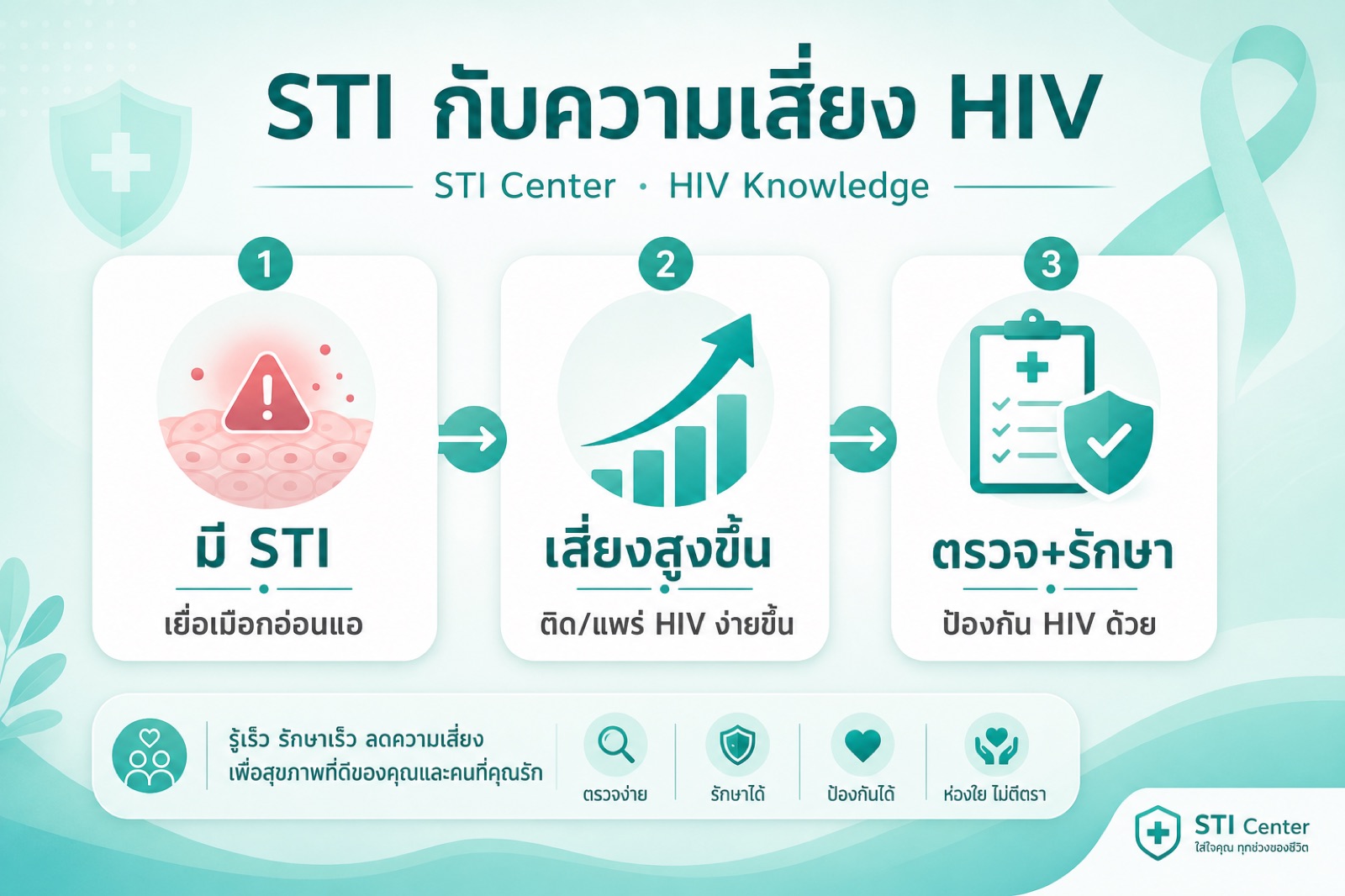
STIs and HIV are related but not the same. HIV is one STI among many; chlamydia, gonorrhea, syphilis, herpes, HPV, and hepatitis B are others. Untreated STIs can inflame mucosa and raise HIV acquisition risk, so STI care is core sexual health — not secondary.
This page covers what STIs are, how they spread, why many are asymptomatic, who should screen, why screening matters, and when to seek care. For personal questions, see our FAQ, articles, or contact us.
STI vs STD
An STI (sexually transmitted infection) means having a pathogen acquired through sex or sexual contact, even without symptoms. STD (sexually transmitted disease) often refers to symptomatic or organ-damaging stages — chronic sores, mucosal problems, or long-term complications. Modern services prefer STI language to reduce stigma and encourage testing before symptoms appear.
For example, many people with chlamydia or gonorrhea have no symptoms — an STI not yet felt as daily "disease," but the pathogen remains, spreads, and can inflame fallopian tubes or sperm ducts over time. Calling it an STI does not mean it is mild — it means there is still time to act before permanent harm.
Public health research shows many people with chlamydia or gonorrhea are unaware and remain untreated, transmitting for long periods. Modern clinics prefer STI language to emphasize manageable infection rather than frightening "disease." If you learned STD from older sources, both terms may still appear — STI framing promotes earlier screening.
Understanding terminology helps you communicate clearly with clinics. When clinicians ask history or recommend tests, they mean infection that may be asymptomatic — not that you already have severe disease. Good clinics gladly re-explain without making you feel foolish.
| Term | Focus | Example |
|---|---|---|
| STI | Infection (may be asymptomatic) | Asymptomatic chlamydia |
| STD | Symptoms or damage that has occurred | Pelvic pain from tube inflammation |
| Clinical use | STI term promotes early screening | Screening 1–2 times per year |
How STIs spread
STIs spread through sexual contact involving body fluids or skin with open sores. Main routes are vaginal, anal, and oral sex, plus shared sex toys without cleaning or condom covers. Some STIs — herpes, HPV, pubic lice — spread through direct genital skin contact even without penetration.
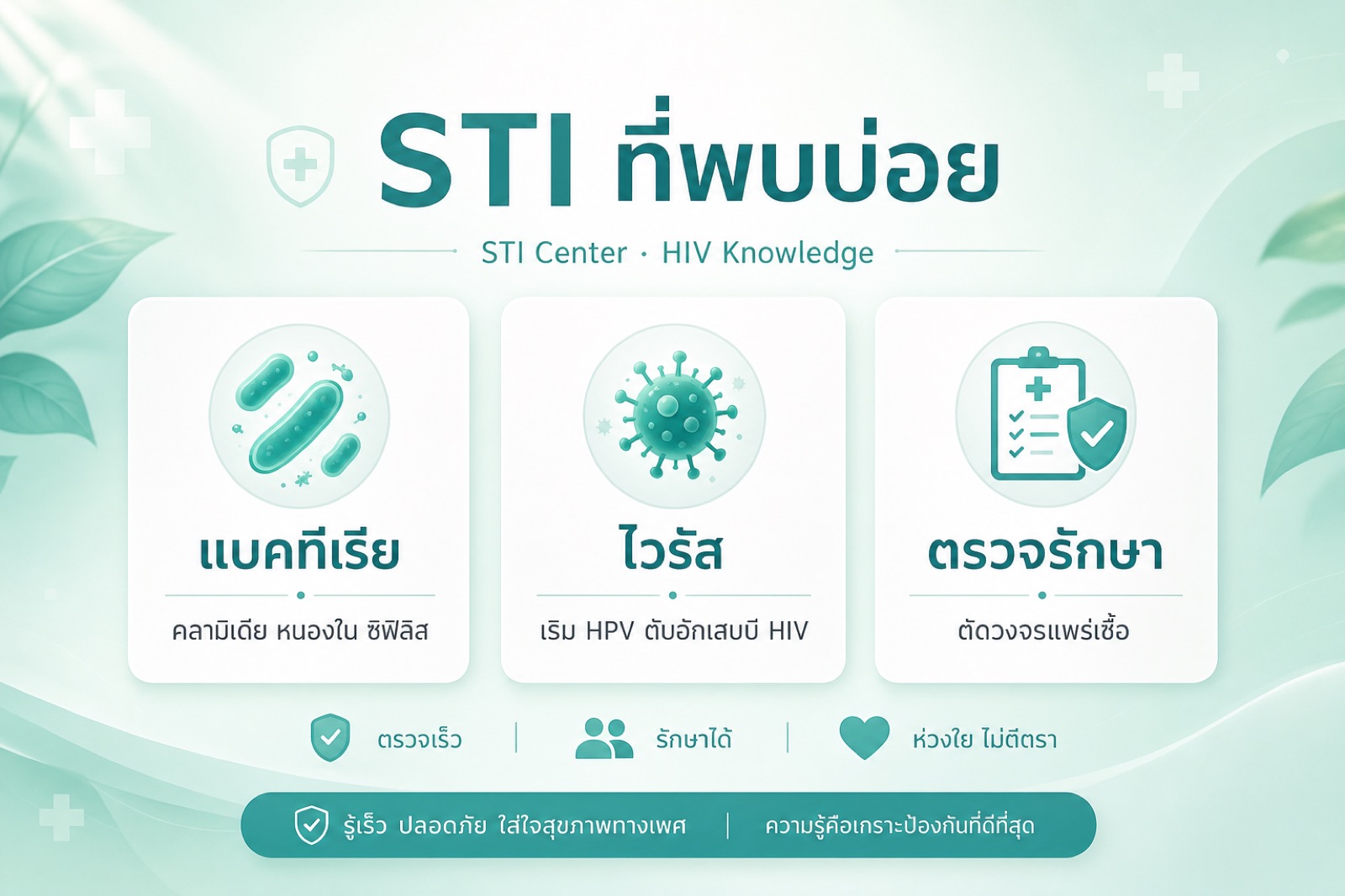
STI pathogens include bacteria (chlamydia, gonorrhea, syphilis), viruses (herpes, HPV, hepatitis B, HIV), and parasites (pubic lice). Each differs in transmission and detectability. One sexual contact with an infected person can be enough — you do not need "extreme" risk behavior.
- Vaginal, anal, or oral sex without condoms
- Contact with open sores or genital fluids
- Shared needles or injection equipment (hepatitis B/C in some cases)
- Mother-to-child transmission during birth (e.g., syphilis, hepatitis B)
- Shared sex toys without protection
Most STIs do not spread through handshakes, hugs, cheek kisses, shared toilets, swimming pools, or shared chairs. Misunderstanding transmission delays testing and fuels unnecessary shame. If unsure whether contact was risky, ask a clinician confidentially.
Why many STIs have no symptoms
Asymptomatic STIs are a major public health issue. Chlamydia and gonorrhea often cause no symptoms in many women and men. Syphilis may show only small, easy-to-miss sores. Herpes can be acquired without obvious blisters. Many HPV strains cause no warts but still persist and spread. People remain untreated and keep transmitting.
No symptoms does not mean no health risk. Untreated chlamydia can cause pelvic inflammatory disease, affect fertility, and raise ectopic pregnancy risk; in men it can inflame sperm ducts. Untreated syphilis can harm the heart, brain, and nerves over time. Waiting for symptoms is not enough for good STI care.
Signs to watch for (if present)
- Burning or pain when urinating
- Unusual discharge from genitals
- Sores, blisters, or rash on genitals or mouth
- Lower abdominal pain, testicular pain, or pain during sex
- Bleeding after sex (outside menstruation)
- Swollen lymph nodes in the groin
However, having no symptoms does not exempt you from screening if behavior suggests exposure. See STI testing for when and what to test.
Who is at risk
Anyone who has sex can get an STI — not only groups society labels "at risk." Factors that raise exposure include multiple or new partners, condomless sex, prior STIs, or a partner notifying infection. Unprotected anal or oral sex also risks throat, rectal, and genital infections.
Pregnant people with unknown STIs can affect infants at birth, so prenatal screening matters. People on PrEP for HIV still need regular STI screening because PrEP does not cover other STIs. People of all genders and orientations face exposure — none are automatically "safe."
| Factor | Why | Approach |
|---|---|---|
| New/multiple partners | Unknown partner status | Condoms + regular screening |
| No condoms | Direct fluid and skin contact | Condoms every time + testing |
| Partner notification | Known exposure | Test and treat per guidelines |
| Repeated STI history | Re-exposure or incomplete treatment | More frequent screening + follow-up |
| On PrEP | Sex may still expose to STIs | STI tests per PrEP schedule |
Why STI screening matters
STI screening finds asymptomatic infections, enables early treatment, reduces transmission, and prevents long-term complications such as fertility problems, HPV-related cancers, or syphilis damage. Testing is informed self-care — you know your status, plan prevention, and communicate with partners more clearly.
Bacterial STIs like chlamydia, gonorrhea, and syphilis are often curable with complete antibiotics — early detection changes outcomes. Viral STIs like herpes and HPV may persist, but knowing status helps manage symptoms and transmission. Regular screening matters for ongoing risk, not just one-time checks.
STI services are confidential — do not delay from fear or shame. Many clinics protect privacy. For sample types and window periods, see STI testing. If positive, see STI treatment.
STIs and HIV — brief link
HIV is one STI spread through sex and blood, but STI care is broader — many other infections need screening and treatment. Untreated chlamydia, gonorrhea, or syphilis can inflame mucosa and recruit immune cells, raising HIV acquisition risk if HIV exposure occurs. Treating STIs lowers that risk.
PrEP and HIV ART address HIV specifically — they do not replace STI prevention or treatment. Condoms remain important for both. If risk overlaps, screen for STIs and HIV per clinical guidance. See STI prevention.
When to seek care
Seek care promptly for suspected symptoms — sores, discharge, burning urine, rash, pelvic pain, or swollen glands. Even without symptoms, test with new partners, condomless sex, partner notification, condom failure, or on your risk-based schedule (often 1–2 times yearly, or every 3–6 months if higher risk).
- Unusual symptoms in genitals, rectum, mouth, or nearby skin
- Partner notifies STI — test even without symptoms
- New condomless sexual contact
- Routine screening interval for your risk level
- Pregnant or planning pregnancy — per prenatal care
- After STI treatment — follow-up testing as advised
If unsure what or when to test, ask a sexual health clinician. Choosing to test is not admitting "guilt" — it is informed self-care. Good clinics explain options, cost, privacy, and next steps if positive. Do not wait until symptoms worsen; early care is easier and limits long-term harm.
Summary and further guidance
Consult a clinician for personalized STI guidance.
Consult a clinician for personalized STI guidance.
Consult a clinician for personalized STI guidance.
Consult a clinician for personalized STI guidance.
Consult a clinician for personalized STI guidance.
Consult a clinician for personalized STI guidance.
Summary
STIs are sexual infections that can affect anyone. Many are asymptomatic but still transmissible and harmful. Understanding STI vs STD, transmission, and your risk is the foundation of good care. Risk-based screening, completing treatment, and prevention with condoms and eligible vaccines protect you and partners.
Do not wait for symptoms if you know you were at risk — read STI testing, STI prevention, STI treatment, and common STIs. For questions, see our FAQ or contact us.