
STI Knowledge
Common STIs
Overview of common STIs — chlamydia, gonorrhea, syphilis, herpes, HPV, trichomoniasis, hepatitis B, and HIV — with symptoms, testing, and treatment pointers.
Introduction
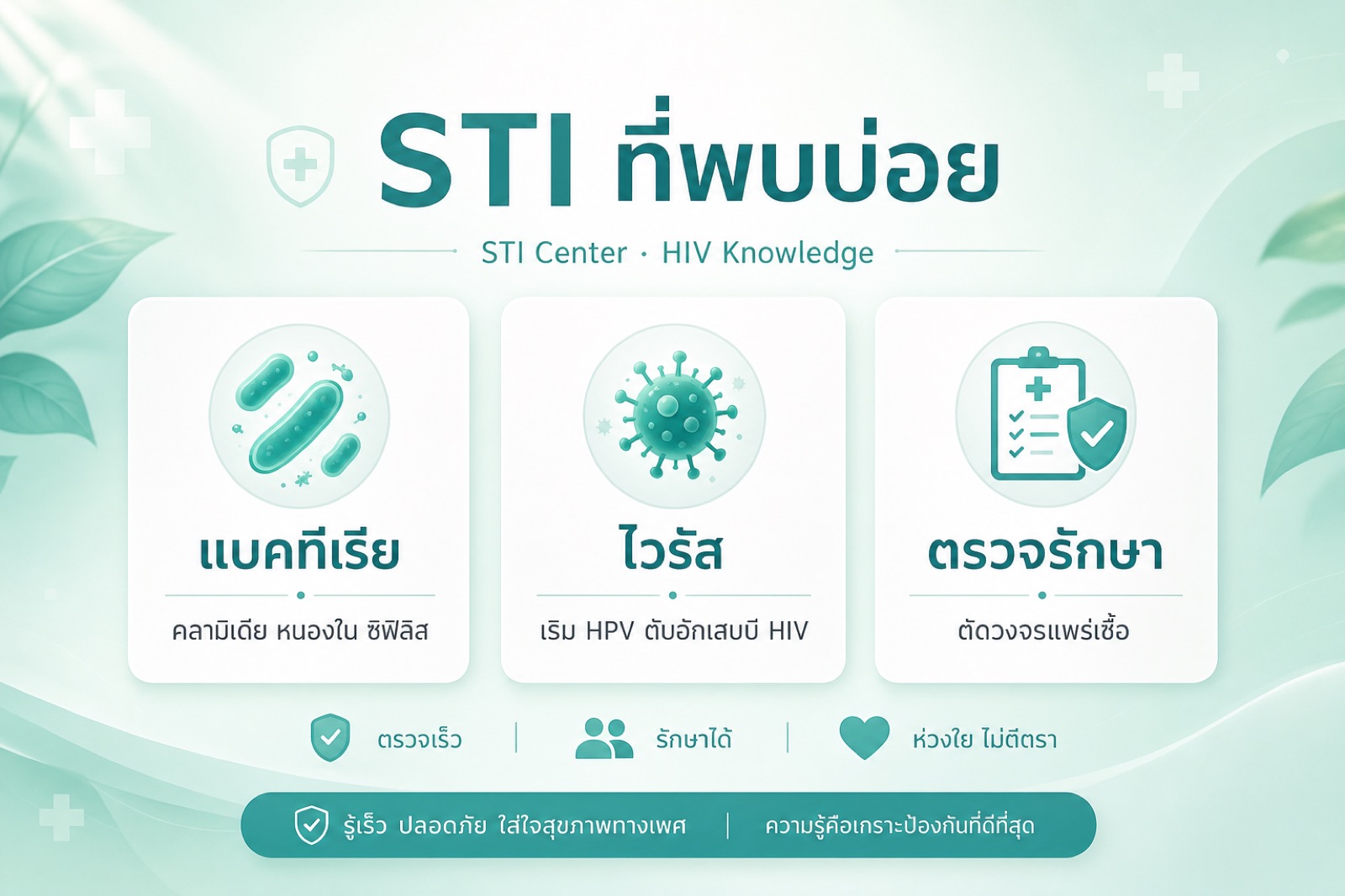
Many STIs exist, but some appear most often in sexual health clinics: chlamydia, gonorrhea, syphilis, herpes, HPV, trichomoniasis, hepatitis B, and HIV. Each differs in cause, symptoms, testing, and treatment. An overview helps you know what to watch for, what to test, and when to seek care.
Many STIs are asymptomatic, especially chlamydia and gonorrhea — waiting for symptoms is not enough. See STI testing and What are STIs?.
This page summarizes each condition — typical symptoms, testing, treatment pointers, and links to STI treatment and STI prevention. This is general information; diagnosis and treatment require a clinician.
Questions? FAQ, articles, or contact us.
Overview of common STIs
| Condition | Cause | Typical symptoms | Usual treatment |
|---|---|---|---|
| Chlamydia | Bacteria | Often none; burning urine | Antibiotics |
| Gonorrhea | Bacteria | Discharge; burning urine | Antibiotics |
| Syphilis | Bacteria | Painless sores; rash; swollen glands | Penicillin injection |
| Herpes | HSV virus | Blisters; sores; burning | Antivirals/symptom care |
| HPV | Virus | Warts or none | Treat warts; vaccine |
| Trichomoniasis | Parasite | Itching; discharge; odor | Antiparasitic meds |
| Hepatitis B | Virus | Often none initially | Vaccine/antivirals |
| HIV | Virus | Often none early | Antiretroviral therapy (ART) |
Chlamydia
Chlamydia is a very common bacterial STI affecting the cervix, rectum, throat, or urethra. Many people have no symptoms; others may notice burning urine or unusual discharge. Untreated, it can cause pelvic inflammatory disease, affect fertility, and raise ectopic pregnancy risk.
Testing: urine or site-specific swab (NAAT). Treatment: antibiotics per guidelines — usually a short course; treat partners and retest after treatment. See STI treatment and STI testing.
Gonorrhea
Gonorrhea often causes genital discharge, burning urine, or sore throat (pharyngeal infection), but many people are asymptomatic. Untreated, it can cause pelvic inflammatory disease and fertility effects. Antibiotic resistance is a concern in many areas — clinicians choose appropriate regimens.
Testing: urine or swabs (throat, rectum, cervix). Treatment: antibiotics — injection and/or oral per guidelines; follow-up and retesting as advised. Partners should be treated.
Syphilis
Syphilis progresses through stages: primary (often painless sores), secondary (rash, swollen glands, systemic symptoms), then latent and late stages affecting the heart, brain, eyes, and nerves if untreated. Congenital syphilis can harm infants.
Testing: blood tests (serology), sometimes repeated. Treatment: penicillin injections by stage; blood follow-up after treatment. See STI treatment.
Herpes (HSV)
Herpes is caused by HSV-1 or HSV-2, producing blisters or sores on genitals, mouth, or nearby areas. Some people have mild or no symptoms but can still transmit, especially with open sores. Outbreaks may recur; the virus persists — it is not curable.
Testing: swab from sores when present, or blood in some cases. Treatment: antivirals reduce outbreaks; avoid sex with open sores; use condoms when no sores. See STI prevention.
HPV and genital warts
HPV is extremely common with many strains — some cause genital warts, others raise cancer risk (cervical, anal, oral, genital). Many people have no warts or symptoms. The body may clear some strains; others persist.
Testing: clinical exam for warts; Pap/HPV screening per guidelines. Treatment: topical meds, cryotherapy, or surgery for warts; HPV vaccination prevents related strains — see STI prevention.
Trichomoniasis
Trichomoniasis is caused by the parasite Trichomonas vaginalis, often causing itching, irritation, unusual discharge, and changed odor. Some men have no symptoms but can still transmit. Untreated, it may raise risk of other STIs.
Testing: urine or swab. Treatment: antiparasitic medication (often metronidazole or tinidazole) per clinician; partners should be treated.
Hepatitis B
Hepatitis B spreads through blood and sex. Early infection may be asymptomatic or flu-like with jaundice and abdominal pain. Chronic infection can cause severe liver disease and liver cancer. Hepatitis B vaccination is highly effective prevention.
Testing: blood (antigen/antibody). Treatment: depends on stage — some need long-term antivirals. Unvaccinated people should ask about vaccination. See STI prevention.
HIV — an STI (brief)
HIV is an STI spread through sex and blood. Early infection may cause flu-like symptoms or none. Without treatment, HIV damages immunity leading to AIDS. Consistent ART lowers viral load and greatly reduces transmission (U=U when undetectable). HIV requires dedicated care separate from other STIs — test when at risk.
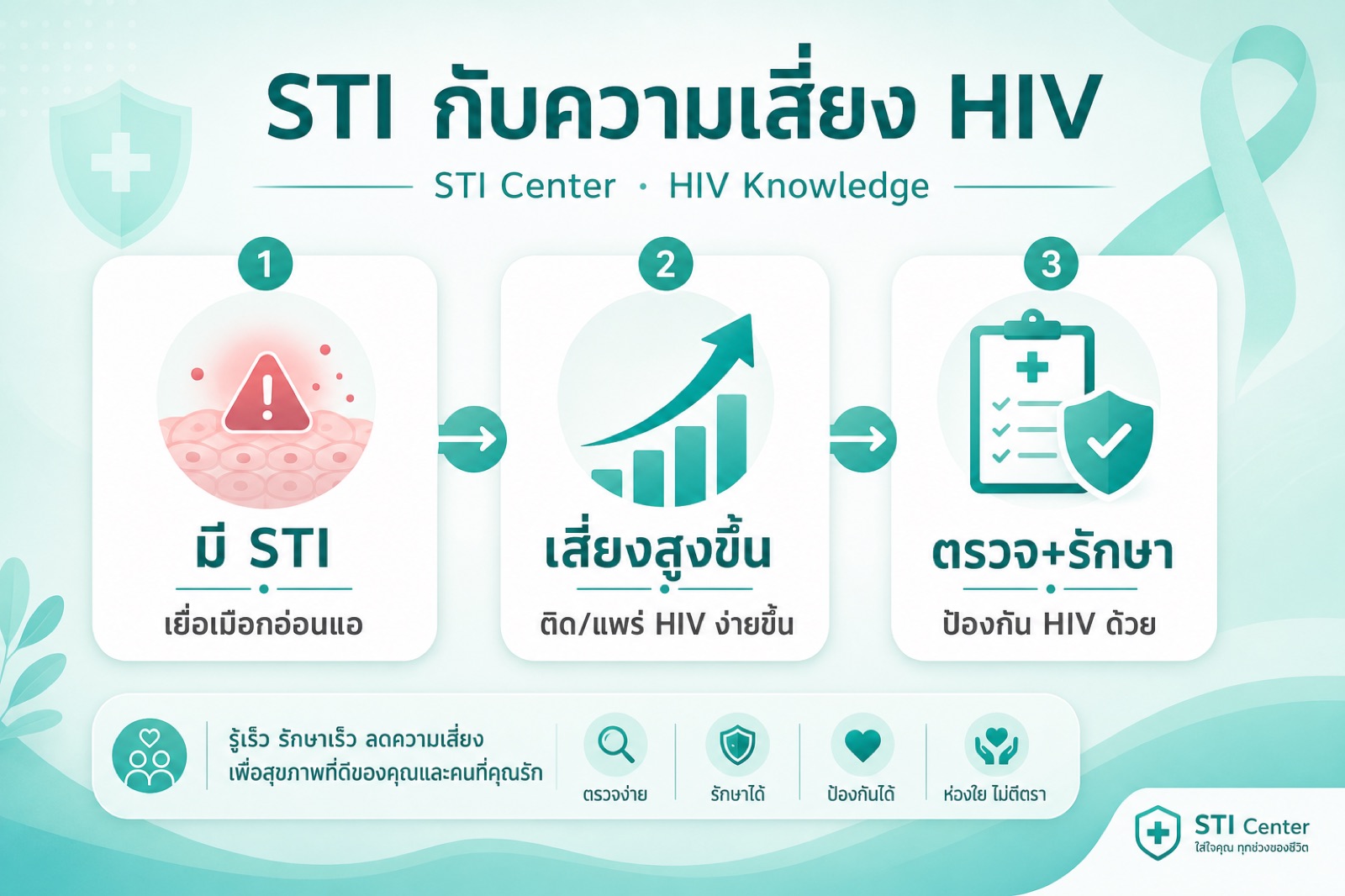
Untreated other STIs can raise HIV acquisition risk — STI and HIV care are linked. See What are STIs? and STI testing if HIV is included in your panel.
When to test and treat
Regardless of which STI you suspect, the same principles apply: test with symptoms, risk, partner notification, or routine screening; treat per clinician guidance; complete medication; treat partners; follow up. See STI testing, STI treatment, and STI prevention.
- Suspected symptoms — test promptly
- No symptoms but at risk — screen on schedule
- Positive result — start treatment and notify partners
- After treatment — retest as scheduled
- Prevention — condoms, vaccines, regular screening
Summary and further guidance
Consult a clinician for personalized STI guidance.
Consult a clinician for personalized STI guidance.
Consult a clinician for personalized STI guidance.
Consult a clinician for personalized STI guidance.
Consult a clinician for personalized STI guidance.
Consult a clinician for personalized STI guidance.
Consult a clinician for personalized STI guidance.
Consult a clinician for personalized STI guidance.
Additional notes
Consult a clinician for personalized guidance.
Consult a clinician for personalized guidance.
Consult a clinician for personalized guidance.
Summary
Common STIs differ in details but share core principles: risk-based screening, completing treatment, preventing reinfection, and partner notification. Do not wait for symptoms if you know you were at risk.
See What are STIs?, STI testing, STI treatment, STI prevention. Questions? FAQ.