
STI Knowledge
STI Prevention
Learn STI prevention with condoms, communication, HPV and hepatitis B vaccines, reducing partner risk, regular screening, and partner notification basics.
Introduction
STI prevention is informed, responsible sexual health — not fear, shame, or judging choices. We have proven tools: condoms, partner communication, HPV and hepatitis B vaccines, and regular STI screening and treatment to reduce ongoing transmission.
No single method is 100% effective in every situation, but layered prevention greatly reduces risk. Regular STI testing reveals status early and links to care. Do not wait for symptoms if you have risk.
This page covers condoms, communication, vaccines, reducing partners or overlap, PrEP and PEP notes (HIV only), screening as prevention, and partner notification basics. For STI overview, see What are STIs?.
Prevention does not mean avoiding relationships — it means choosing tools that fit your life: condoms, communication, vaccines. Consistency and updating your plan when things change matter most.
Questions? See FAQ, articles, or contact us. Good prevention starts with STI testing.
Why STI prevention still matters
STIs still occur because many infections are asymptomatic, people skip testing, or do not finish treatment. Prevention reduces new infections, transmission, and complications such as fertility problems, HPV-related cancers, or syphilis damage. Good prevention starts with understanding risk, not judging behavior.
Untreated STIs can raise HIV risk through inflamed mucosa. Testing and treating STIs is integrated sexual health — see What are STIs? for the HIV link.
- Lowers infection and transmission risk
- Reduces anxiety and supports life planning
- Links to testing and care when needed
- Prevents long-term complications
Condoms and safer sex
Condoms are affordable, widely available, and highly effective against many STIs when used correctly from start to finish during vaginal, anal, or oral sex (with oral condoms or dental dams as appropriate). They reduce fluid and skin contact, though not every area may be covered.
Using condoms correctly
- Check expiry and packaging; store cool and dry
- Put the condom on before any contact with partner fluids
- Use compatible lubricant (avoid oil-based lube with latex condoms)
- Hold the base when removing; use a new condom each time — never reuse
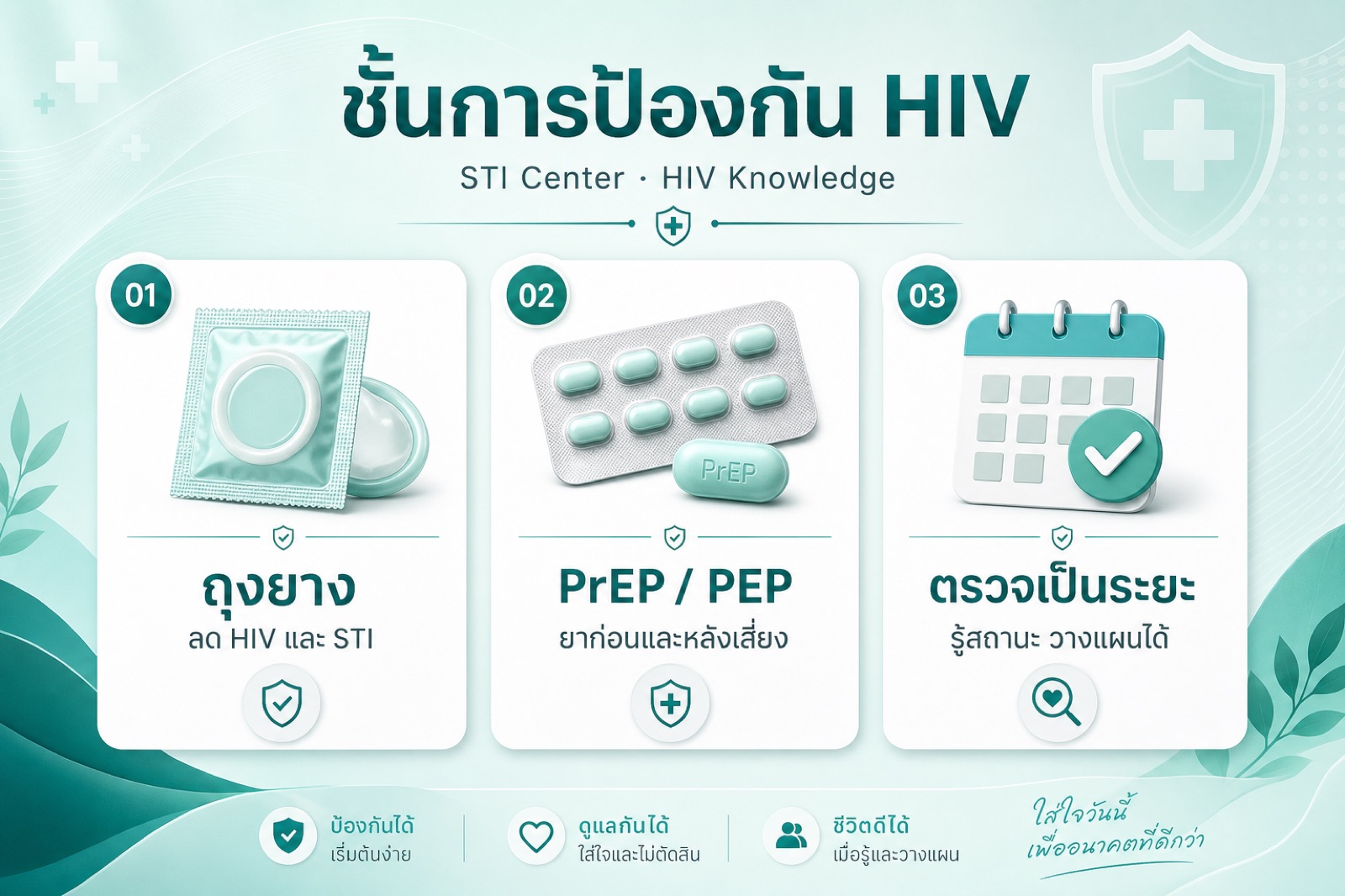
Condoms are not 100% against every STI — herpes, HPV, and pubic lice may spread from uncovered skin — but they greatly reduce risk. Combine condoms with regular screening and eligible vaccines.
Communication with partners
Talking about STIs, testing, and prevention with partners can feel hard but reduces misunderstandings and supports informed choices. You need not disclose everything immediately, but discussing condoms, recent testing, and comfort boundaries matters when ready.
If partner talks are difficult, confidential clinical counseling is an option. The goal is safe, confident choices — not pressure from others. Notifying partners after diagnosis (partner notification) is responsible care; clinicians may advise anonymous notification systems where available.
Vaccines for STI prevention
HPV vaccines prevent strains linked to genital warts and cervical, anal, and oral cancers. Recommended from adolescence per national guidelines; adults who missed doses may still benefit. HPV vaccine does not replace Pap/HPV screening or condoms but greatly lowers related cancer and wart risk.
Hepatitis B vaccine prevents hepatitis B virus spread through sex and blood. If never vaccinated or immune status unknown, ask about vaccination. Chronic hepatitis B can cause severe liver disease and cancer — vaccination is highly valuable.
| Vaccine | Prevents | Notes |
|---|---|---|
| HPV | HPV strains linked to warts/cancer | Age-based schedules |
| Hepatitis B | Hepatitis B virus | Check immunity if unsure |
Reducing partners and overlap
Fewer partners and avoiding overlapping concurrent partners lowers STI exposure — not moral judgment, but risk reduction when it fits you. Mutual monogamy with consistent condoms or other agreed measures after testing lowers risk versus multiple unknown-status partners.
With multiple partners, regular STI testing and condoms every time still matter. Reducing overlap does not replace other prevention — combine with condoms, screening, and vaccines.
PrEP and PEP — HIV only note
PrEP and PEP prevent HIV specifically — not other STIs like chlamydia, gonorrhea, herpes, or HPV. People on PrEP should still use condoms and follow PrEP STI screening schedules. PEP is for HIV exposure within 72 hours — an emergency, not STI prevention.
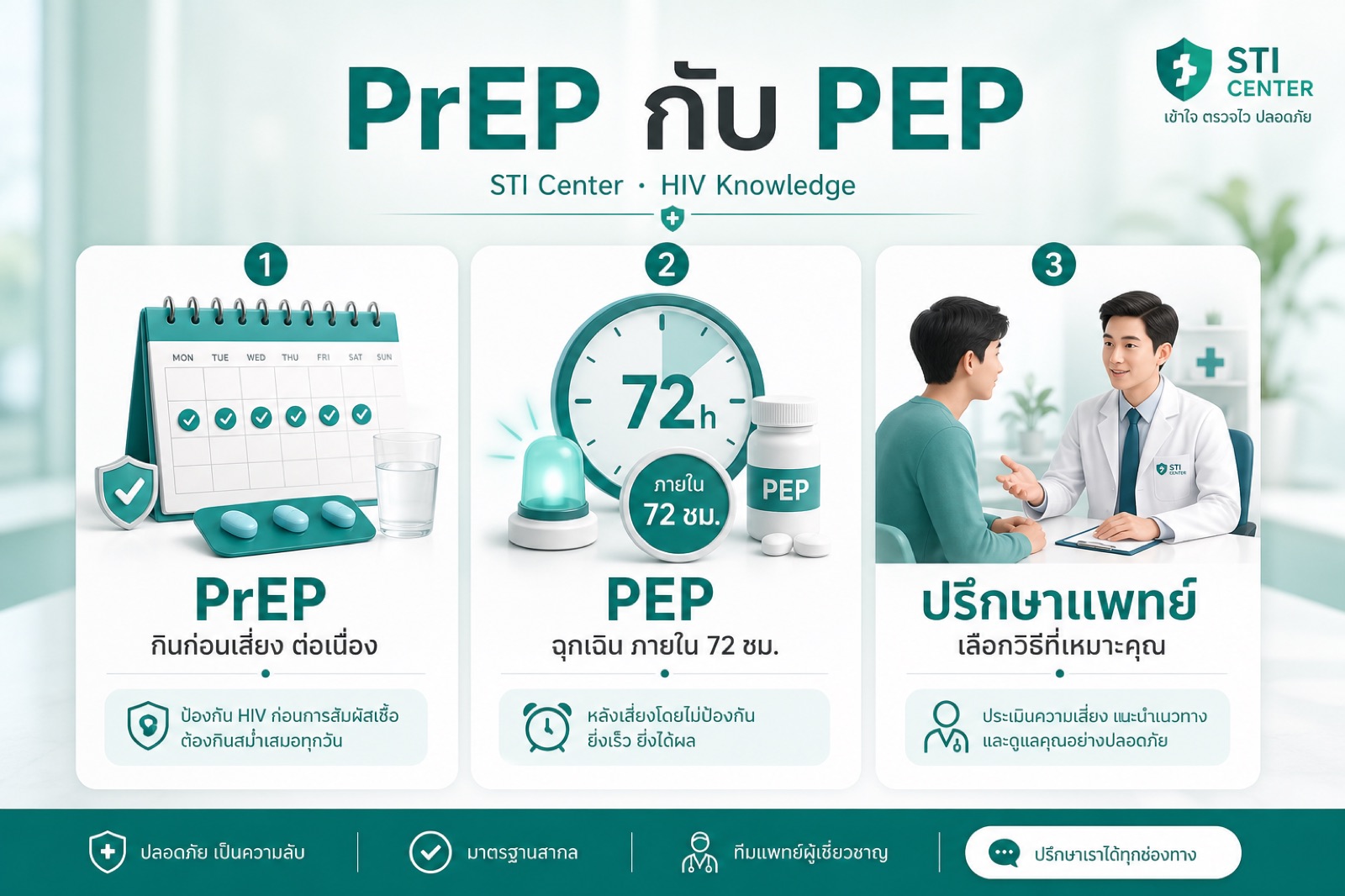
For PrEP or PEP, consult HIV-specific care. For STIs, focus on condoms, testing, and vaccines. See STI testing for PrEP-aligned screening.
Regular screening as prevention
Regular STI screening is not only "finding disease" — it detects asymptomatic infections, enables early treatment, and stops transmission before it spreads. Screening is prevention at both population and personal levels. General guidance: 1–2 times yearly with new or multiple partners; every 3–6 months if higher risk.
Treating STIs found through screening is prevention too — less transmission and fewer complications. See STI testing and STI treatment.
Partner notification basics
When you have an STI, notifying partners who may have been exposed to test and treat is essential care — it breaks transmission chains. Bacterial STIs often warrant partner treatment even without symptoms. You may notify yourself or ask clinics for confidential partner notification where available.
- Notify partners from the likely exposure period (clinicians help define timing)
- Encourage testing and treatment per guidelines
- Avoid blame — focus on forward care
- Ask the clinic if self-notification is difficult
Summary and further guidance
Consult a clinician for personalized STI guidance.
Consult a clinician for personalized STI guidance.
Consult a clinician for personalized STI guidance.
Consult a clinician for personalized STI guidance.
Consult a clinician for personalized STI guidance.
Consult a clinician for personalized STI guidance.
Additional notes
Consult a clinician for personalized guidance.
Consult a clinician for personalized guidance.
Consult a clinician for personalized guidance.
Consult a clinician for personalized guidance.
Summary
STI prevention combines condoms, communication, vaccines, reducing partner risk, regular screening, and treatment when needed. PrEP and PEP address HIV — not other STIs.
See What are STIs?, STI testing, STI treatment. Questions? FAQ or contact us.